In the southwestern United States, a large underground mining operation spans nearly 17 miles of interconnected workings beneath a region dense with oil and gas infrastructure. While the location supports regional energy development, it also introduces a serious safety challenge: the possibility that drilling or wellbore activity could intersect underground headings, allowing hazardous gases to migrate into the mine.
Although breakthrough events are uncommon, the consequences can be severe. Methane, hydrogen sulfide, and other toxic or combustible gases can enter unexpectedly, spreading quickly through ventilation pathways and creating immediate risk for personnel and operational continuity.
Mine leadership understood that managing this hazard would require more than isolated gas detection points. What was needed was a comprehensive early-warning system capable of monitoring both active work zones and remote headings; delivering real-time visibility before a developing event could escalate.
According to Jeremy McKern, a Business Development Manager at Conspec Controls, projects like this represent the kind of partnership the company values most. “Projects like this are exactly where we do our best work; partnering closely with the mine to understand real operational risks and delivering a monitoring solution that gives them early warning without putting people in harm’s way,” he explains. “Our goal isn’t just to install sensors; it’s to build a system the mine can trust, one that integrates into their operations and provides clear, real-time insight into potential hazards.”
Prior to the project, the mine lacked an integrated gas monitoring network designed to address surface-to-underground ingress risk. While limited point solutions existed, there was no unified system capable of delivering continuous, centralized monitoring across the underground footprint.
Conspec began with a collaborative risk assessment, mapping potential gas entry pathways, reviewing ventilation patterns, and identifying areas where early detection would provide the greatest protective value. As McKern notes, the complexity of underground mining demands more than standard equipment. “The complexity of mining environments demands more than off-the-shelf equipment,” he says. “It requires a thoughtful, engineered approach that considers how gases could enter, how they would be detected, and how operators can respond quickly.”
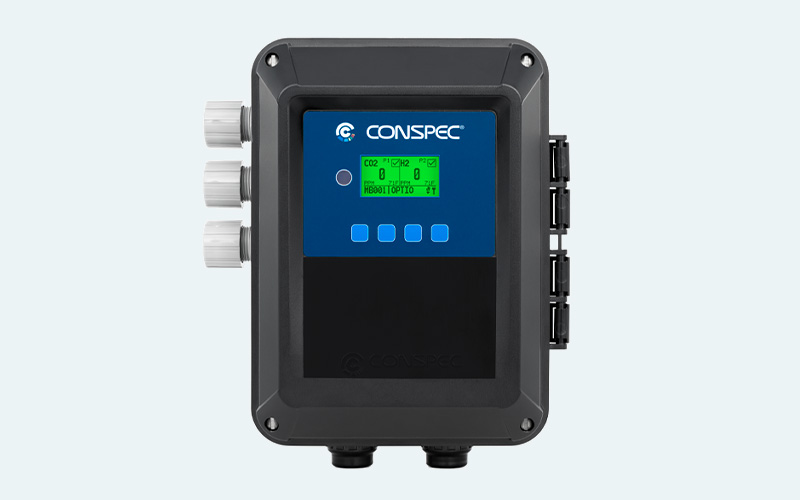
The resulting solution was designed to continuously monitor methane (CH4), hydrogen sulfide (H2S), carbon monoxide (CO), nitric oxide (NO), and oxygen (O2) levels throughout the mine. Detection thresholds, alarm logic, and reporting structures were aligned with the mine’s operational and emergency response protocols; ensuring the system functioned as an integrated safety framework rather than a collection of standalone devices.
Designing a monitoring system for nearly 17 miles of underground workings required a distributed, scalable architecture. Remote headings (often the first areas where gases could enter or accumulate) were treated as critical early-detection zones, not afterthoughts.
By leveraging the mine’s existing network infrastructure through Power-over-Ethernet (PoE) technology, the system transmits both power and data through a single cable, reducing installation complexity while enabling centralized visibility.
“In an environment as dynamic as an underground mine, early detection is everything,” McKern explains. “By leveraging the site’s existing network infrastructure, we were able to deliver continuous gas monitoring with immediate visibility from anywhere. At Conspec, we believe safety systems should reduce exposure, not add to it; which is why remote monitoring and real-time data were key design priorities for this installation.”
The result is a platform that not only delivers real-time alerts, but also minimizes the need for personnel to physically enter potentially compromised areas to assess conditions.
The impact of the installation was immediate. What had once been an unpredictable external risk became a continuously monitored condition supported by real-time alerts and actionable data.
Supervisors and safety personnel now have centralized visibility into atmospheric conditions across both high-traffic production zones and remote areas that previously lacked consistent monitoring. This shift enables faster decision-making around ventilation adjustments, evacuation protocols, and incident prevention.
McKern emphasizes that the project’s value extends well beyond installation. “From initial risk assessment through commissioning, our focus is on delivering a complete solution that supports the mine long after installation; because safety is an ongoing commitment,” he says.
This project reflects a broader industry movement toward integrated, networked safety infrastructure that supports continuous environmental awareness. Rather than viewing gas detection strictly as a compliance requirement, forward-thinking operators are investing in engineered systems that strengthen operational resilience and workforce confidence.
For this underground mining operation, the result was more than new monitoring equipment. It was a collaborative, thoughtfully designed safety ecosystem; one engineered to translate complex external risks into clear monitoring strategies that protect people, assets, and operations. Because in underground environments, early detection isn’t just a feature; it’s a responsibility. ∎