What Facility Managers Need to Know About Li-ion Battery Safety
From commercial buildings and campuses to hospitals, data centers, and industrial sites, battery energy storage systems (BESS) are becoming a standard part of modern facilities. But as deployment accelerates, so does the exposure to risk.
Even infrequent lithium‑ion battery failures can result in severe consequences: extended fires, forced evacuations, operational downtime, regulatory scrutiny, and reputational damage. High‑profile incidents have made one thing clear: traditional fire protection strategies alone are not sufficient for large‑scale energy storage. To manage this risk effectively, facilities need visibility into battery failures before smoke or visible flames appear. That is where early‑warning gas detection (aligned with modern codes and standards) plays a critical role.
Understanding the Early Stages of Thermal Runaway
Thermal runaway is not an instantaneous event. In many real-world incidents, it develops gradually and without obvious visual cues.
How Thermal Runaway Begins
A thermal event often starts with a single compromised cell (caused by mechanical damage, improper installation, aging, or a latent manufacturing defect). Internal heating follows, triggering chemical decomposition of the electrolyte and other materials within the cell. At this stage, there may be no smoke, flame, or visible indication that anything is wrong.
Gas Venting: The First Observable Warning
As decomposition progresses, the affected cell begins to vent gases such as carbon monoxide (CO), hydrogen (H₂), methane (CH₄), and volatile organic compounds (VOCs). This gas release frequently occurs well before ignition and represents the earliest externally detectable sign of failure.
Escalation to Fire or Explosion
If the underlying condition is not addressed, heat and gas accumulation can eventually lead to dense smoke, open flame, or explosion (often involving multiple cells or racks). By the time traditional fire detection activates, the event may already be difficult to control.
From a safety and operations standpoint, the gas‑venting phase offers the best opportunity to intervene. Early detection enables investigation, ventilation, controlled shutdowns, and early notification (actions that are far less effective once flames or smoke are present).
Why Gas Detection Is a Critical Early‑Warning Tool
Gas monitoring plays a unique role in battery safety because it targets the earliest measurable indicators of abnormal battery behavior.
What Gases Reveal About Battery Health
As lithium‑ion batteries and surrounding materials degrade, they release specific gases tied directly to decomposition and overheating. Carbon monoxide is generated from organic material breakdown, hydrogen and methane can accumulate rapidly and introduce explosion risk in confined spaces, and VOCs are released from plastics, insulation, and solvents used throughout battery modules and enclosures.
Turning Gas Measurements Into Action
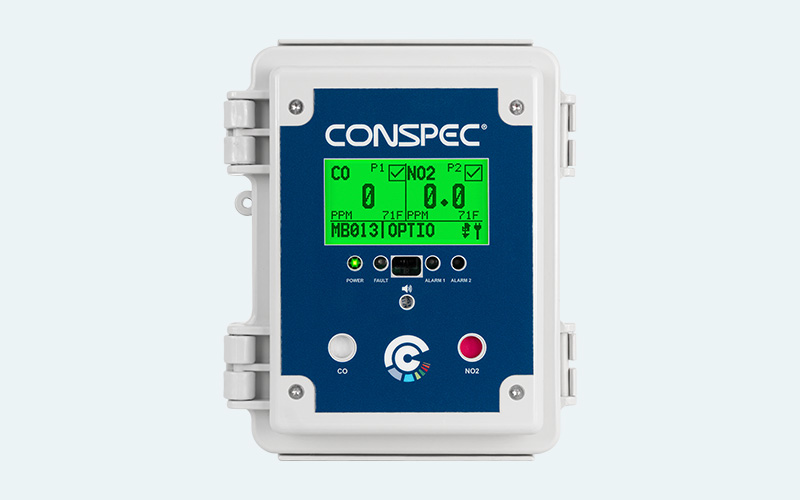
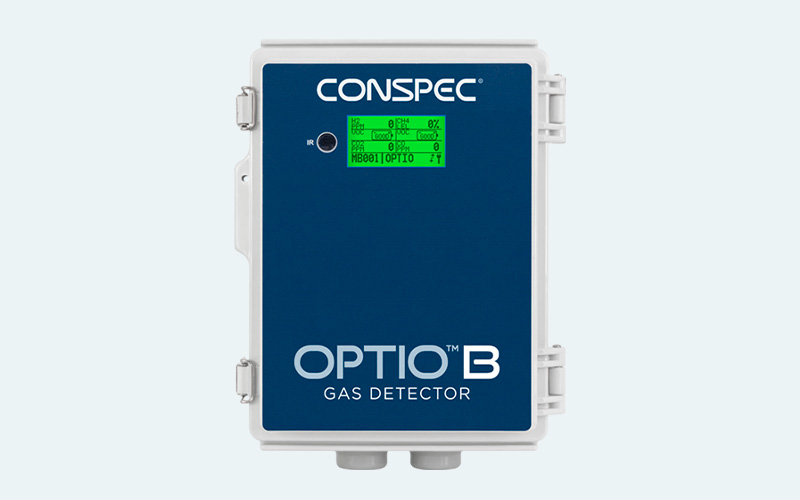
Fixed gas detection systems installed in battery rooms, containers, and adjacent spaces continuously track these indicators. When properly engineered, these systems support staged alarm strategies rather than a single binary response. Early‑stage alerts can prompt investigation or increased ventilation, while higher alarm levels can trigger system isolation, shutdowns, and emergency notifications.
Extending Visibility Beyond Traditional Detection
Gas detection does not replace temperature, smoke, or flame detection. Instead, it extends situational awareness into the earliest (and most manageable) phase of a failure. By detecting changes that precede visible fire indicators, facilities gain valuable time and options to respond safely.
Codes & Standards Are Raising Expectations
Regulators, insurers, and authorities having jurisdiction (AHJs) are increasingly focused on early detection and gas hazard management for BESS installations. Several standards are shaping these expectations.
NFPA 855 – Standard for the Installation of Stationary Energy Storage Systems
NFPA 855 has become a cornerstone document for stationary lithium‑ion systems. It addresses:
- Siting, separation distances, and fire‑resistance requirements.
- Ventilation and explosion risk considerations.
- Early warning fire detection, recognizing that detection may involve multiple technologies (including gas monitoring) based on system design.
For facility owners and designers, NFPA 855 reinforces that basic room smoke detection is often insufficient for larger or higher‑risk energy storage installations.
International Fire Code (IFC) and Local Amendments
Many jurisdictions adopt the IFC with amendments specific to energy storage systems. Common requirements include:
- Fire detection and suppression within ESS rooms, containers, and enclosures.
- Mechanical ventilation where flammable or toxic gases may be present.
- Detection‑based controls that automatically initiate ventilation, alarms, and system responses.
In some regions, gas detection is explicitly identified as a means to maintain concentrations below hazardous thresholds and to support safe emergency response.
NFPA 70 (NEC), NFPA 72, and Related Standards
- NFPA 70 (NEC) addresses electrical equipment and ventilation in environments where flammable gases may be present (directly relevant to battery rooms and containers).
- NFPA 72 governs how detection systems interface with fire alarm, notification, and control functions, including the use of gas detection for supervisory and alarm purposes.
Together, these standards emphasize that gas detection should be fully integrated into electrical, fire alarm, and life‑safety systems (not treated as an isolated add‑on).
Practical Considerations for BESS Safety
Gas detection is most effective when it is treated as part of a layered safety strategy rather than a standalone add‑on.
Risk Assessment and Code Review
Facility managers should begin by identifying where lithium‑ion batteries are installed, how spaces are ventilated, and where gases could accumulate. Applicable requirements from NFPA 855, the IFC, the NEC, local amendments, and insurance providers should be reviewed early to avoid costly redesigns later.
Defining Clear Detection Objectives
Detection strategies should be driven by clear goals; whether that’s early anomaly detection, explosion prevention, life‑safety protection, or a combination of all three. These objectives directly influence sensor selection, placement, alarm thresholds, and system integration.
Sensor Placement and Alarm Strategy
CO, H₂, and VOC sensors should be positioned in locations where gases are most likely to appear or collect, such as near racks, within containers, or at exhaust and ceiling levels. Multiple alarm levels should be established, each tied to predefined operational responses rather than ad‑hoc decision making.
Integration, Testing, and Training
Gas detection should interface cleanly with building automation systems, battery management systems, and fire alarm panels so operators receive clear, unified information. Functional testing, routine maintenance, and personnel training are essential to ensure alarms are understood and acted upon correctly.
Making Early Warning a Core Part of Battery Safety
Lithium‑ion energy storage will continue to expand across commercial and industrial environments. Managing the associated risk requires more than reacting to fires after they start.
Early‑warning gas detection provides facilities with:
- Earlier insight into abnormal battery behavior.
- Greater alignment with modern codes and standards.
- More time and more options to respond safely and effectively.
For organizations looking to strengthen their BESS safety strategy, the next step is collaboration (with fire protection engineers, code consultants, and experienced gas detection providers) to ensure CO, H₂, and VOC monitoring is properly designed, integrated, and maintained.
The objective is straightforward: move from reactive protection to proactive risk management so that thermal runaway can be identified early, controlled effectively, and prevented from becoming a major incident. ∎