Ammonia (NH₃) remains one of the most efficient and widely used refrigerants in commercial and industrial environments, but it also comes with a complex and evolving regulatory landscape.
For safety managers, engineers, and facility operators, understanding ammonia gas detection requirements isn’t just about checking a compliance box. It’s about designing systems that protect people, maintain uptime, and stand up to scrutiny from regulators, insurers, and internal stakeholders.
The challenge is that requirements don’t come from a single source. Instead, they’re often shaped by overlapping standards, codes, and regulations; each contributing to how ammonia detection systems should be designed, installed, and maintained. This guide breaks down what you need to know and how to make sense of it.
Over the past decade, ammonia safety requirements have become more standardized, but not necessarily simpler.
Most major codes and standards bodies now align around IIAR guidance as the foundation for ammonia (R-717) refrigeration safety. At the same time, enforcement has increased across multiple fronts, including OSHA inspections, EPA risk management oversight, and more rigorous insurance audits. Local jurisdictions have also become more active in adopting and enforcing fire and mechanical codes tied to ammonia systems.
The result is a shift in expectations. Facilities are no longer evaluated on whether they simply have detection in place. Increasingly, the focus is on whether systems are properly engineered, fully integrated into safety responses, and actively maintained over time.
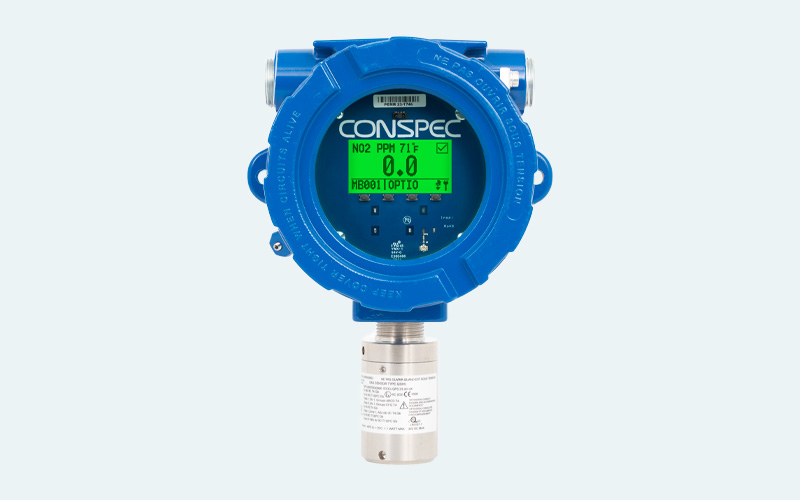
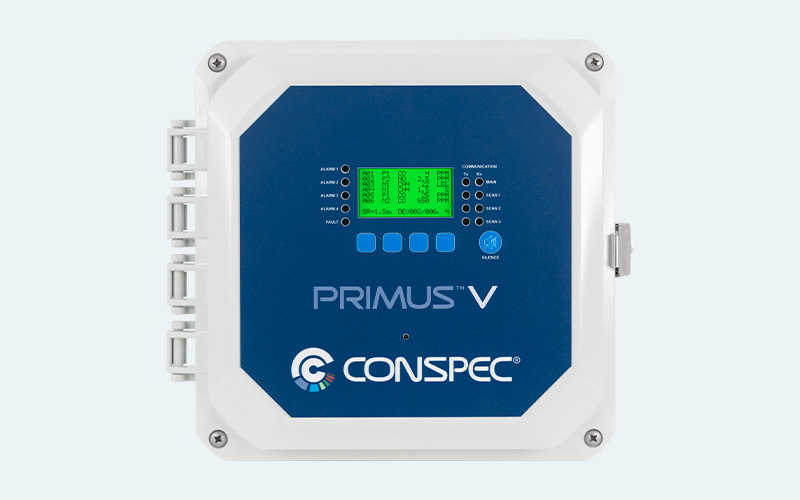
Conspec’s Allen Mattson adds, “A well-designed ammonia detection system does more than enhance safety; it reduces the operational burden on facility managers by automating detection, alarm response, and system integration. That minimizes the need for manual monitoring and decision-making during critical events”
A useful way to understand ammonia detection requirements is to group them into four interconnected pillars:
Taken together, these pillars form the framework that governs how ammonia detection systems are designed and evaluated.
At the core of any ammonia detection strategy are workplace exposure limits. Established by Occupational Safety and Health Administration (OSHA), National Institute for Occupational Safety and Health (NIOSH), and American Conference of Governmental Industrial Hygienists (ACGIH), these limits define the concentrations at which ammonia begins to pose a risk to personnel and therefore serve as the starting point for alarm and response strategies.
| Standard / Organization | Ammonia Exposure Limit, Duration | Threshold |
|---|---|---|
| NIOSH | Recommended Exposure Limit, 10-hours TWA | 25 ppm |
| ACGIH | Threshold Limit Value, 8-hours TWA | 25 ppm |
| NIOSH / ACGIH | Short-Term Exposure Limit (STEL), 15-minutes | 35 ppm |
| OSHA | Permissible Exposure Limit, 8-hours TWA | 50 ppm |
| NIOSH | Immediately Dangerous to Life or Health (IDHL), Immediate | 300 ppm |
In practical terms, these thresholds drive how detection systems behave. Most facilities configure low-level alarms at or near 25 ppm to provide early warning, giving personnel time to respond before conditions escalate. From there, higher alarm levels trigger increasingly aggressive responses, such as ventilation, system shutdown, or evacuation.
This approach ensures that detection systems are aligned with real-world safety outcomes; not just numerical thresholds.
While OSHA defines safe exposure levels, IIAR standards define how ammonia detection systems should be designed to enforce those limits.
Standards such as IIAR 2 for new systems, IIAR 9 for existing installations, and IIAR 6 for maintenance collectively establish expectations for detector placement, alarm sequencing, ventilation integration, and equipment shutdown. These standards are highly practical, focusing on how systems perform in real operating conditions rather than theoretical compliance.
One of the most important developments in recent years is that many major U.S. codes now defer to IIAR 2 as the primary design standard, simplifying what was once a fragmented regulatory landscape . For safety professionals, this means IIAR is no longer just a reference; it’s the foundation of system design.
For facilities with larger ammonia inventories, the regulatory scope expands beyond internal operations to include community safety and environmental impact.
The EPA’s Risk Management Program applies to facilities storing 10,000 pounds or more of ammonia, requiring a structured approach to hazard assessment, prevention, and emergency response. Similarly, SARA Title III (EPCRA) classifies ammonia as an extremely hazardous substance, introducing requirements for emergency planning, release reporting, and coordination with local authorities.
These regulations reinforce an important reality: ammonia incidents don’t stop at the facility boundary. Detection systems play a critical role in early identification and response, helping prevent situations that could escalate into larger community risks.
In addition to federal regulations and IIAR standards, ammonia detection systems are shaped by fire codes and mechanical standards such as NFPA 1 and ASHRAE 15 and 34. These frameworks define how refrigeration systems should be safely applied and how detection integrates with broader building safety systems.
However, these standards are not applied uniformly. Their implementation depends on how they are adopted at the local level, which is where the Authority Having Jurisdiction becomes critical. The AHJ ultimately determines how requirements are interpreted and enforced, influencing everything from detector placement to ventilation strategies.
As a result, compliance is not purely a matter of following national standards; it requires an understanding of how those standards are applied locally.
Even well-intentioned teams can run into challenges when navigating ammonia gas detection requirements.
One of the most common issues is designing to a single standard without considering how multiple regulations interact. Others overlook local code amendments or AHJ interpretations, which can introduce additional requirements late in a project. Another frequent gap is treating detection as a standalone system rather than integrating it with ventilation, alarms, and control systems.
Maintenance is another area where facilities often fall short. Detection systems require regular calibration, testing, and verification to remain effective. Without it, even a well-designed system can become unreliable over time.
These pitfalls highlight the importance of taking a holistic approach; one that considers not just compliance, but performance and longevity.
Ammonia gas detection requirements are becoming more aligned across standards, but they still require careful interpretation and application.
“Systems that are properly designed, documented, and commissioned are far easier to maintain in alignment with IIAR and ASHRAE standards,” adds Mattson. “Integrated monitoring, fault supervision, and structured calibration programs help ensure ongoing compliance while reducing the administrative and technical burden on facility managers.”
The most effective facilities move beyond minimum compliance and focus on building systems that provide early warning, automate critical safety responses, and remain operational when they’re needed most. They also recognize that detection is not a one-time installation, but an ongoing process that includes maintenance, testing, and continuous improvement.
That’s the difference between being compliant and being prepared. ∎
Understanding the requirements of ammonia gas detection is the first step; but turning those requirements into a reliable, real-world system is where the real challenge begins. Read How to Design an Ammonia Gas Detection System where we’ll walk through how to design an effective ammonia gas detection system, including sensor selection, placement strategies, alarm setpoints, and system integration best practices.