Designing an ammonia gas detection system is about more than meeting code requirements; it’s about building a system that performs reliably under real-world conditions. While standards like IIAR define what’s required, they don’t always address the nuances that determine whether a system actually protects people and operations when it matters most. That’s where thoughtful engineering comes in.
In this guide, we move beyond compliance to explore how ammonia (NH₃), commonly used as refrigerant R-717, should be monitored in commercial and industrial environments—and what it takes to design a system you can trust.
Most ammonia detection systems begin with a clear objective: meet applicable codes and standards. But compliance alone doesn’t guarantee performance.
A system can technically meet requirements and still fall short if sensors are poorly placed, alarms don’t trigger meaningful action, or critical components fail during an emergency. The difference between a compliant system and an effective one lies in how well it is designed, integrated, and maintained over time.
The goal should always be the same: detect early, respond automatically, and remain operational under all conditions.
Every ammonia system is different, and detection design should reflect that. The risks present in a compressor room are very different from those in a cold storage warehouse or a packaged rooftop system.
Compressor and machinery rooms typically represent the highest risk. These spaces contain the largest ammonia inventory and the greatest number of potential leak sources. As a result, they require more robust detection strategies, including redundancy, multiple sensor ranges, and automated response mechanisms.
Refrigerated spaces present a different challenge. While ammonia concentrations are typically lower, leaks can still impact personnel safety and product integrity. Detection in these areas is often focused on early warning near evaporators and piping systems.
Other environments, such as equipment located outside machinery rooms, packaged systems, or enclosed pits, may require more aggressive responses depending on the potential for ammonia accumulation. Even outdoor systems must be evaluated carefully, as limited ventilation or enclosure conditions can still allow hazardous concentrations to develop.
Effective system design starts by understanding these differences; not by applying a one-size-fits-all approach.
One of the most common mistakes in ammonia detection system design is oversimplifying sensor selection. It’s not just about choosing a detection range; it’s about selecting the right technology and range combination for the environment and risk profile.
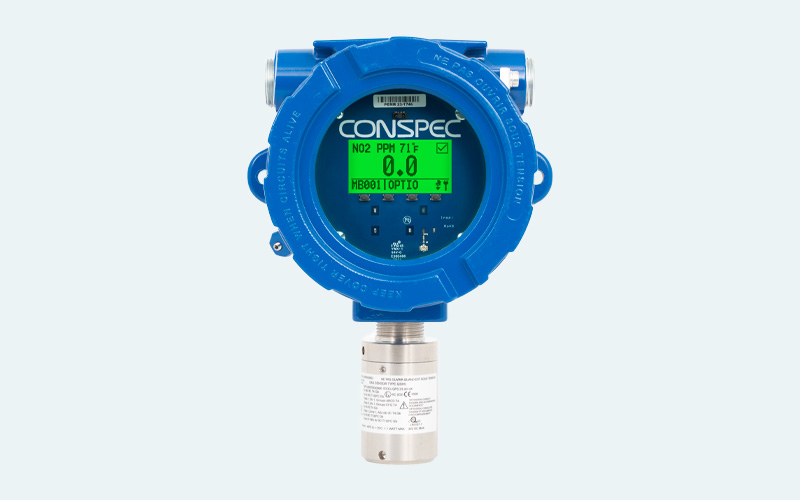
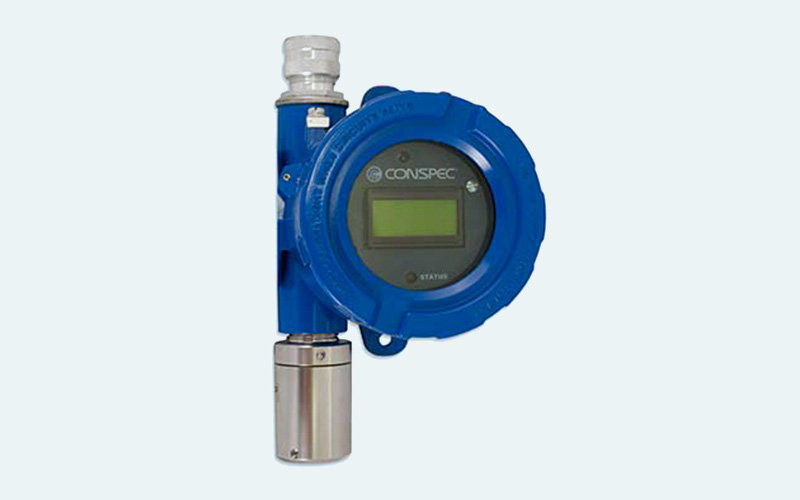
In most commercial and industrial applications, electrochemical sensors are the foundation of ammonia detection. They are widely used for ambient monitoring because they provide high accuracy at low concentrations, making them ideal for protecting personnel and detecting leaks early in areas like refrigerated spaces and processing environments.
Other technologies play an important role depending on the application. Metal-oxide semiconductor (MOS) sensors are highly sensitive and effective for leak detection, particularly where early indication of gas presence is critical. Infrared (IR) sensors offer strong stability in environments where temperature and humidity fluctuations could impact other sensing methods. For high-concentration scenarios, catalytic bead sensors are often used to detect large releases and support emergency response actions in machinery and compressor rooms.
Just as important as sensor type is the detection range. Low-level detection (typically in the 0–100 ppm range) is essential in occupied areas such as cold storage and food processing facilities, where early warning is needed to protect workers and maintain safe conditions. In contrast, higher-range detection (The LEL of ammonia in air is 15% by volume) is required in machinery and compressor rooms, where a significant release could cause a risk of fire and / or explosion.
Even the best sensor will fail if it’s installed in the wrong location.
Ammonia is lighter than air in its gaseous form, which would suggest ceiling-level placement. However, real-world conditions are more complex. Liquid ammonia releases can create dense, cold vapor clouds that remain low to the ground, while airflow from fans and ventilation systems can mix concentrations throughout a space.
For this reason, most best practices (and many standards) recommend placing sensors in the breathing zone, approximately five feet off the floor. This ensures that readings reflect what personnel are actually exposed to.
Placement should also account for:
In larger areas, coverage becomes just as important as location. Sensors should be distributed to ensure that no significant leak source is left unmonitored.
Detection alone does not improve safety; response does. A well-designed ammonia detection system uses escalating alarm levels to trigger increasingly aggressive actions. These thresholds are typically aligned with both regulatory guidance and industry best practices.
At lower concentrations, alarms are intended to alert personnel and notify a monitored location. As concentrations increase, the system should automatically activate ventilation systems to dilute and remove ammonia from the space. At the highest levels, detection systems may initiate equipment shutdown to prevent further release and reduce risk.
The most important consideration is that these actions happen automatically. In an emergency, there is no time to rely on manual intervention.
An ammonia detection system should never operate in isolation. Its value comes from how it integrates with the broader safety infrastructure of the facility.
In practice, this means detection systems are connected to:
This level of integration transforms detection from a passive monitoring tool into an active safety system capable of mitigating incidents in real time.
A detection system is only effective if it works when it’s needed most.
That’s why reliability must be built into every level of the design. Systems should be supported by backup power, typically through a combination of uninterruptible power supply (UPS) and emergency generator integration. This ensures continuous operation during power outages, which are often associated with emergency conditions.
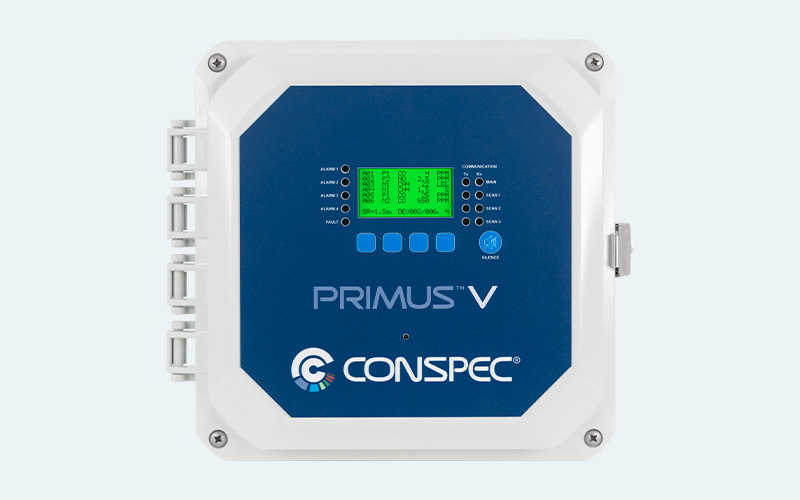
Equally important is system supervision. Modern detection systems monitor sensor health, communication status, and wiring integrity, generating fault signals if any part of the system becomes compromised . This allows issues to be identified and addressed before they impact performance.
Redundancy is another key consideration, particularly in high-risk areas like compressor rooms. Using multiple sensors not only improves coverage but also ensures that detection capability is maintained even if one device fails.
Even the best-designed ammonia detection system will degrade over time without proper maintenance.
Sensors must be calibrated regularly to ensure accuracy, and system functionality should be tested to verify that alarms, ventilation, and shutdown sequences operate as intended. Industry guidance typically recommends calibration and testing at defined intervals, often every six months.
Maintenance is not just a compliance requirement—it is essential to ensuring that the system performs as expected during an actual event. Without it, detection systems can become unreliable, creating a false sense of security.
The most effective ammonia detection systems strike a balance between regulatory compliance and operational performance.
They align with IIAR standards and applicable codes, but they are also designed with real-world conditions in mind. They account for how ammonia behaves in different environments, how personnel interact with the system, and how quickly conditions can change during a leak event.
This approach results in systems that not only pass inspections but also deliver meaningful protection for people, assets, and operations.
Ammonia detection is a critical component of any industrial safety strategy, but it is only as effective as the design behind it.
From sensor selection and placement to system integration and maintenance, every decision plays a role in determining how the system performs when it matters most.
At Conspec, we work with safety professionals and engineers to design integrated gas detection solutions that go beyond minimum requirements; delivering reliability, visibility, and confidence across the entire operation. ∎
Whether you’re designing a new ammonia (R-717) system or upgrading an existing installation, the right gas detection system can make all the difference. Connect with our team to evaluate your gas detection strategy and ensure your safety system is built to perform.