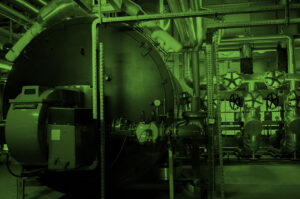
Mechanical and boiler rooms are essential to the operation of commercial buildings, hospitals, universities, and industrial facilities. These spaces house critical equipment such as boilers, water heaters, pumps, and fuel-burning appliances that keep buildings comfortable and operational.
However, because these systems rely on combustion and fuel sources, mechanical rooms can also present serious safety hazards. Without proper safeguards, toxic and combustible gases can accumulate (sometimes without warning) putting maintenance personnel, contractors, and building occupants at risk.
Implementing the right safety measures, including proper ventilation, routine maintenance, and continuous gas detection, can dramatically reduce these risks.
Boilers and heating systems commonly rely on fuels such as natural gas, propane, or oil. While these fuels are widely used and generally safe when equipment is functioning properly, failures in equipment, fuel lines, or ventilation systems can create dangerous conditions. Some of the most common hazards include:
Because mechanical rooms are often enclosed spaces with limited airflow, gases can build up quickly if an issue occurs.
Several gases may be present in mechanical or boiler room environments. Each presents its own set of safety risks.
“Mechanical rooms often contain multiple gas hazards at once; some of which may be odorless. Without continuous monitoring, dangerous conditions can develop long before anyone realizes there’s a problem,” explains Matthew Eversole of Conspec Controls.
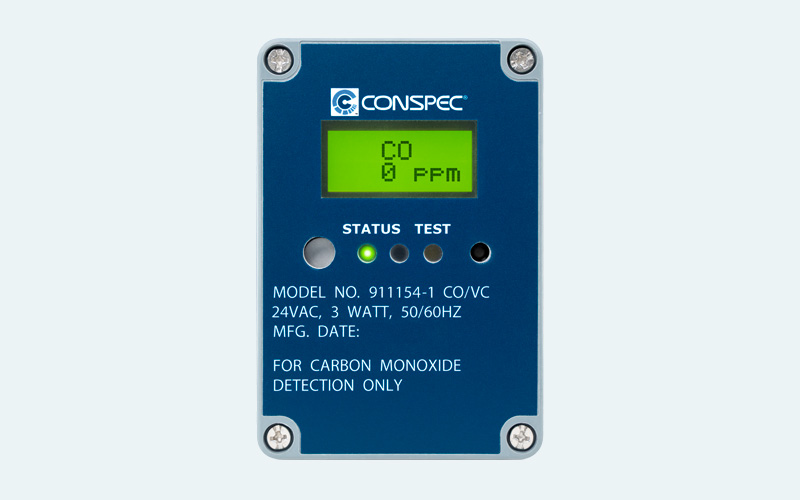
Carbon monoxide is a colorless, odorless gas produced by incomplete combustion of fuel. Even small concentrations can cause symptoms such as headaches, dizziness, and nausea. At higher concentrations, exposure can become life-threatening within minutes. CO is one of the most common hazards in boiler rooms because it can be generated when burners are improperly adjusted or ventilation systems fail.
Natural gas leaks present both health and explosion hazards. In an enclosed mechanical room, combustible gas concentrations can rise to dangerous levels if leaks occur in supply lines, valves, or connections. If the gas reaches the lower explosive limit (LEL) and encounters an ignition source, it can result in a fire or explosion.
Nitrogen dioxide can be produced during high-temperature combustion processes. Exposure can irritate the respiratory system and worsen existing lung conditions. NO₂ may be present near gas-fired appliances and equipment operating in confined mechanical spaces.
Effective safety strategies combine facility design, preventive maintenance, and continuous monitoring.
Ventilation systems are the first line of defense against toxic gas buildup. Mechanical rooms should be designed with adequate airflow to remove combustion byproducts and dilute any leaking gases. Intake and exhaust systems must remain unobstructed, and ventilation equipment should be inspected regularly.
Without proper ventilation, even small leaks or combustion issues can create dangerous conditions.
Routine inspection and maintenance of boilers, burners, and fuel supply systems help prevent conditions that produce hazardous gases. Maintenance programs should include:
Proactive maintenance helps identify problems before they create dangerous conditions.
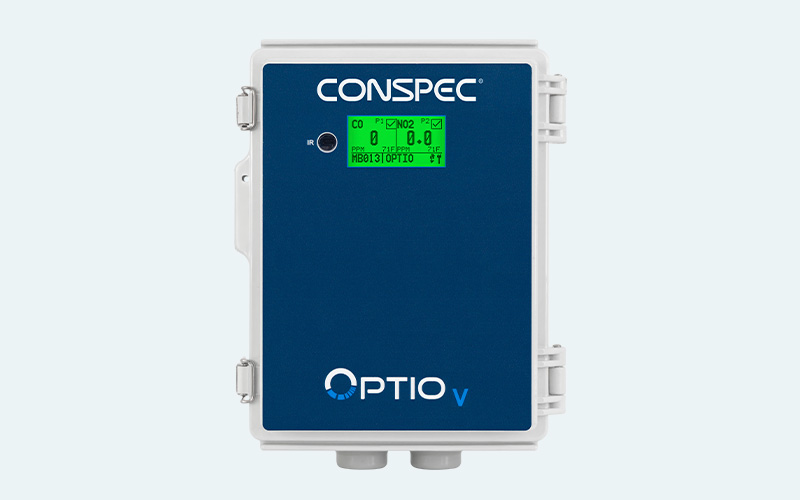
While ventilation and maintenance reduce risk, they cannot eliminate it entirely. Continuous gas detection provides an additional layer of protection by monitoring the environment and alerting personnel when gas levels rise. Modern gas detection systems can monitor for multiple hazards commonly found in mechanical rooms, including:
These systems can trigger audible and visual alarms, activate ventilation equipment, or notify building management systems when hazardous conditions are detected. Continuous monitoring ensures that developing problems are detected early; often before they pose a serious threat to personnel.
Integrating gas detection with ventilation controls or building automation systems can further enhance safety. For example, when elevated gas levels are detected, the system can automatically:
Automated responses help facilities respond quickly and consistently to potentially hazardous conditions.
“Ventilation and maintenance are critical, but they’re not foolproof. Gas detection provides the real-time insight facilities need to catch issues early and respond before they escalate,” adds Eversole.
Mechanical and boiler rooms support the essential systems that keep facilities running, but gas hazards in these critical areas can develop quickly and without warning. The right detection system helps facilities identify problems early and respond before they escalate. By combining proper ventilation, preventive maintenance, and reliable gas detection systems, facilities can significantly reduce the risk of toxic exposure or combustible gas incidents.
“Every facility has its own set of risks based on its equipment, layout, and operating conditions. At Conspec, we work closely with facility managers to understand those variables and engineer safety solutions for their environment; so they’re not just compliant, but truly protected,” says Eversole
These measures not only protect maintenance staff and contractors working in these spaces; they also help safeguard the building and everyone inside it. ∎
If you have questions about monitoring for carbon monoxide, combustible gases, or other hazards in mechanical rooms, contact a member of the Conspec team. Our gas detection solutions are designed to be reliable, intuitive, and easy to maintain; helping facilities improve safety while simplifying compliance and system management.