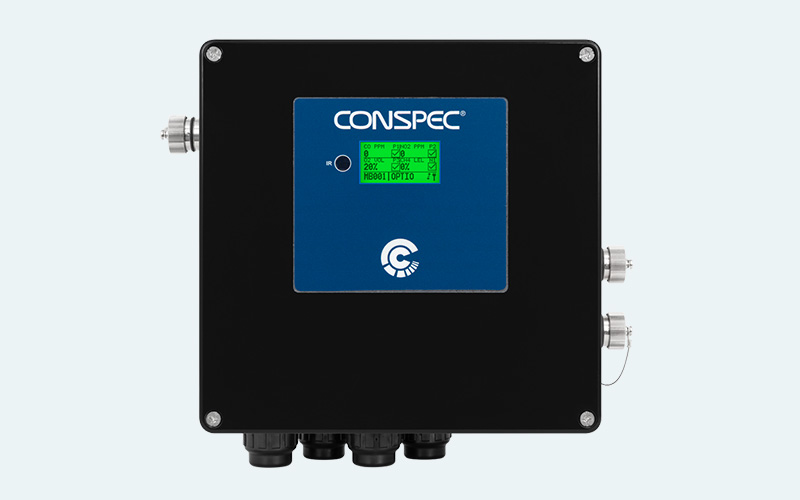
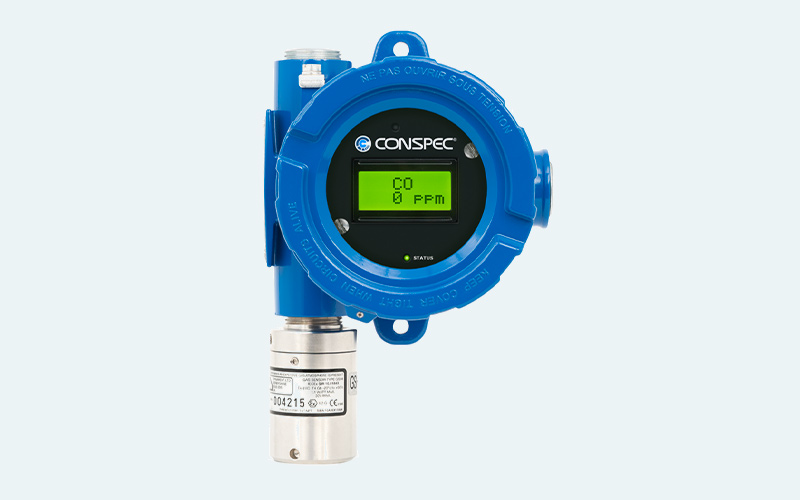
Combustible gases play an essential role in many commercial and industrial processes; from heating and power generation to manufacturing and material handling. But when these gases escape confinement and mix with air at the right concentration, they can quickly become a serious safety hazard.
In facilities where combustible gases are present, gas detection is more than a safety best practice; it’s a mission-critical system that helps protect personnel, prevent catastrophic incidents, and maintain operational continuity.
In this article, we’ll explore why combustible gas detection is necessary, where it is commonly required, and key terminology every facility stakeholder should understand; including the explosive limits that define real-world risk.
Combustible gases are often colorless, odorless, and lighter or heavier than air, allowing them to accumulate unnoticed in enclosed or poorly ventilated spaces. Applications where combustible gases may pose a risk include:
Without detection, a small leak can go unnoticed until it reaches an ignitable concentration; at which point a single spark, hot surface, or static discharge can trigger an explosion.
The primary purpose of a combustible gas detection system is to protect life safety. By continuously monitoring the atmosphere, these systems provide early warning of hazardous gas concentrations, giving personnel valuable time to investigate leaks, evacuate if necessary, and respond before conditions become dangerous.
Early detection also helps prevent fires and explosions. By identifying leaks before combustible gases reach their explosive range, gas detection systems allow corrective action to be taken before a spark or other ignition source can trigger a catastrophic event.
In many applications, gas detection is also essential for meeting building codes, fire codes, industry standards, and insurance requirements. A properly designed detection system helps facilities demonstrate compliance while supporting a safer work environment.
Beyond safety and compliance, gas detection protects equipment and minimizes operational disruptions. Detecting leaks early can help prevent equipment damage, reduce unplanned downtime, and avoid the significant costs associated with emergency repairs and lost productivity.
When integrated with ventilation systems, alarms, or emergency shutdown controls, gas detection becomes an active part of a facility’s safety strategy. Automated responses (such as increasing ventilation or shutting off the fuel supply) can help reduce hazards even before personnel can arrive on the scene.
Understanding the language of gas detection helps facility managers, engineers, and safety professionals make informed decisions. Here are a few common terms which you should be familiar:
Understanding these terms is essential for selecting, installing, and maintaining an effective gas detection system. While explosive limits vary by gas, the goal remains the same: detect hazardous conditions early enough to protect people, property, and operations before an ignition hazard develops.
The table below shows the Lower Explosive Limit (LEL) and Upper Explosive Limit (UEL) for several commonly encountered combustible gases. These values highlight how narrow, and dangerous, the explosive range can be.
| Combustible Gas | LEL (% by volume in air) | UEL (% by volume in air) |
|---|---|---|
| Methane (CH₄) | 5.0% | 15.0% |
| Propane (C₃H₈) | 2.1% | 9.5% |
| Hydrogen (H₂) | 4.0% | 75.0% |
| Carbon Monoxide (CO) | 12.5% | 74.0% |
| Ethylene (C₂H₄) | 2.7% | 36.0% |
| Acetylene (C₂H₂) | 2.5% | 100% |
Combustible gas incidents rarely result from a single failure. They occur when leaks go undetected, ventilation is inadequate, and ignition sources are present. Gas detection breaks that chain by providing visibility into an otherwise invisible hazard.
Whether driven by code requirements, insurance mandates, or a commitment to safety, combustible gas detection is a foundational element of modern facility design and a critical tool in protecting your personnel, property, and operations. ∎
Does your environment present unique fire / safety hazards? Let our safety experts help you design a layered safety strategy that’s engineered to meet your specific needs.