Why UV/IR3 Flame Detection Is Becoming the Oil & Gas Industry Standard
When a fire starts at an oil & gas facility, every second matters.
Hydrocarbon fires can spread rapidly, threatening personnel, equipment, and production. At the same time, compressor stations and processing facilities are full of potential sources of false alarms; from sunlight and hot equipment to welding and other sources of UV and infrared radiation.
For safety professionals, the challenge is finding a flame detection technology that provides fast response without sacrificing reliability.
That is one reason UV/IR3 flame detection has become increasingly popular in oil & gas applications.
What Is UV/IR3 Flame Detection?
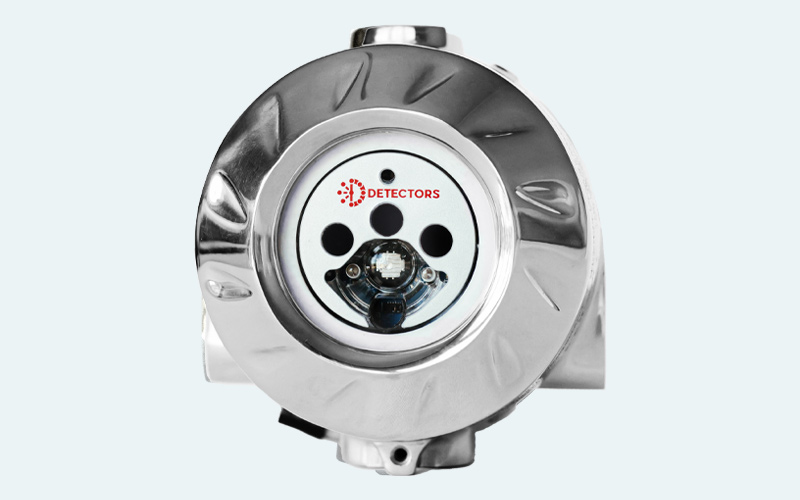
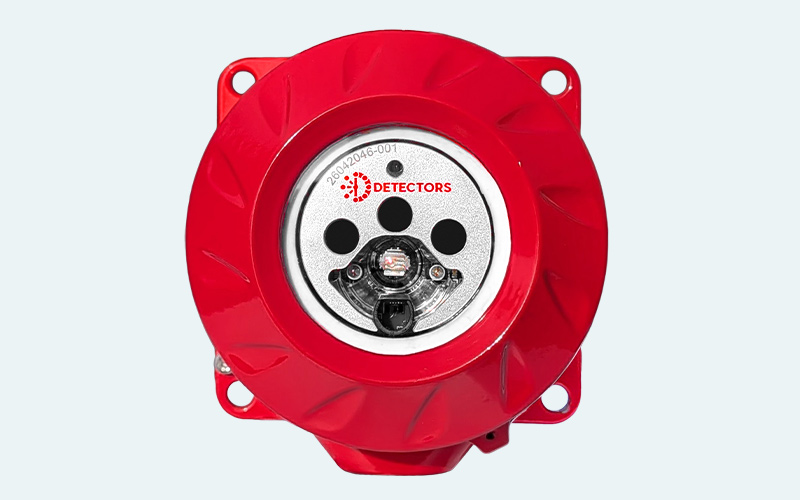
UV/IR3 combines ultraviolet (UV) sensing with three infrared (IR) sensing bandwidths to identify the characteristics of a flame.
The UV sensor provides rapid detection of the radiation emitted by combustion. The three IR sensors monitor specific infrared wavelengths associated with flames. The detector’s algorithms then evaluate these signals together to distinguish an actual fire from non-fire sources.
This multi-spectrum approach provides two important benefits:
- Fast response to actual flames.
- Improved immunity to nuisance / false alarms.
Both are critical in oil & gas environments.
Why False Alarm Immunity Matters
Oil & gas facilities present challenging conditions for flame detectors. Equipment can generate significant heat, while outdoor detectors may be exposed to direct sunlight, changing weather conditions, and other sources of radiation. Maintenance activities such as welding can also create intense UV and IR signatures.
A detector that responds to every potential source of radiation can create unnecessary alarms, shutdowns, and operational interruptions.
UV/IR3 flame detectors address this challenge by analyzing multiple wavelengths and flame characteristics simultaneously. Rather than relying on a single signal, the detector looks for a combination of characteristics consistent with an actual fire.
The result is greater confidence that an alarm represents a genuine fire condition.
Why UV/IR3 Flame Detection Works Well in Oil & Gas Applications
The technology is particularly well suited to oil & gas facilities because it combines several characteristics safety professionals need:
- Rapid Response – UV sensing can identify the radiation associated with a flame extremely quickly.
- False Alarm Immunity – Multiple IR channels and signal processing help distinguish flames from non-fire sources.
- Outdoor Performance – UV/IR3 is designed to perform in environments where sunlight, hot equipment, and changing weather can challenge conventional detection technologies.
- Hydrocarbon Flame Detection – The technology is well suited to the types of hydrocarbon fires that can occur around compressors, piping, processing equipment, and other oil & gas infrastructure.
For critical applications, that combination of speed and selectivity can make a significant difference.
UV/IR3 vs. Other Flame Detection Technologies
Different flame detection technologies have different strengths and limitations.
| Technology |
Key Strength |
Common Considerations |
| UV Flame Detection |
Extremely fast response |
Can be susceptible to lightning, arc welding, and electrical discharges |
| IR Flame Detection |
Good hydrocarbon fire detection and outdoor performance |
Can be affected by hot surfaces and other infrared sources |
| UV/IR Flame Detection |
Combines UV and IR detection |
Provides improved false-alarm immunity compared with single-spectrum technologies |
| IR3 Flame Detection |
Uses three IR wavelengths for advanced discrimination |
Requires appropriate field-of-view and environmental considerations |
| UV/IR3 Flame Detection |
Combines rapid UV response with advanced IR3 discrimination |
Well suited to critical applications requiring high false-alarm immunity |
The right technology ultimately depends on the hazard, environment, facility layout, and required level of protection.
There is no substitute for a properly engineered fire and gas detection strategy.
Technology Is Only Half the Equation
Even the most advanced flame detector cannot compensate for poor placement.
Flame detectors require a clear line of sight to the hazard. Obstructions, improper mounting angles, or inadequate coverage can create blind spots that prevent a detector from seeing a fire. Effective flame detection design should consider:
- Likely fire locations
- Compressor seals and piping connections
- Blowdown areas
- Engines and exhaust systems
- Detector field of view
- Potential obstructions
- Mounting height and angle
- Environmental conditions
- Overlapping detector coverage
This is where flame mapping becomes particularly valuable. Mapping the facility allows engineers and safety professionals to verify that critical hazards are actually within the detectors’ fields of view and identify areas where additional or overlapping coverage may be required.
Integration Matters in Fire Prevention
Flame detection should be part of a larger safety system; not an isolated device. Depending on the facility, flame detectors may be integrated with:
- Emergency shutdown systems
- PLCs
- Fire and gas systems
- Horns and strobes
- SCADA systems
- Other facility control systems
The objective is to ensure that when a fire is detected, the appropriate people and systems receive actionable information quickly.
A detector identifies the hazard. The surrounding safety system determines what happens next.
A Trusted Partner for Oil & Gas Safety
At Conspec Controls, we understand that effective flame detection starts with understanding the application; not simply selecting a detector.
Our team works with operators, engineers, and safety professionals to develop detection strategies based on facility layout, environmental conditions, fire hazards, and system requirements.
From detector selection and placement to system integration and maintenance, our goal is to help customers build safety systems that perform reliably in the environments where they matter most.
Protecting Personnel, Property, and Processes
UV/IR3 flame detection has become increasingly popular in oil & gas because it addresses two of the industry’s most important flame detection requirements: rapid response and reliable false-alarm rejection.
But selecting the right technology is only the beginning. Proper placement, flame mapping, system integration, testing, and maintenance are all essential to achieving reliable protection.
For safety professionals, the goal isn’t simply to install a flame detector. It’s to build a detection strategy that provides speed, coverage, reliability, and confidence when it matters most. ∎