Gas Detection for
Enclosed
Parking
Garages

Real-time monitoring for improved occupant safety. maintained compliance. automating building systems. smarter ventilation.

HVAC icon

Request the Guide

Learn more about Parking Garages in our application guide.

Request the Guide

Learn more about Learn more about Parking Garages in our application guide.

Home Industries Commercial HVAC-R Enclosed Parking Garages

Real-time CO & NO2 Monitoring for Enclosed Parking Garages

Every vehicle entering an enclosed parking garage or underground parking structure produces toxic exhaust gases, including carbon monoxide (CO) and nitrogen dioxide (NO2).

In areas with limited ventilation, these gases can accumulate to levels that pose a health and safety concern to building occupants, particularly during periods of high traffic. Enclosed parking garages and parking structures rely on  gas detection systems and ventilation control to prevent gases from exceeding recognized exposure limits set by OSHA, NIOSH, and other regulatory bodies. The International Mechanical Code (IMC) requires all CO and NO2 monitors used for ventilation control in enclosed parking structures to be listed to UL 2075, the industry standard for gas detection equipment used in life-safety applications.

Whether running continuously or on fixed operating schedules, a ventilation system that operates without the assistance of a gas monitor may be effective, but it is far from efficient. This traditional approach often results in excessive energy consumption and increased equipment wear, yielding unnecessary operating costs. Fixed-schedule ventilation also fails to adapt to changing conditions in real time, allowing gas concentrations to rise during unexpected periods of heavy vehicle traffic while simultaneously ventilating unnecessarily during low-occupancy periods.

Without real-time visibility into CO and NO2 concentrations, facility managers are left with two undesirable options:

  • Over-ventilate and waste energy, or
  • Under-ventilate and risk unsafe conditions.

Neither supports the goals of a safe, efficient, and cost-effective facility.

Get Application Guide Talk to a Specialist

Conspec's Parking Facilty Solution

Partner with parking facilities to create safer, efficient ventilation on-demand systems through intelligent fixed gas monitors and ventilation controllers.

CO and NO2 Gas Monitors

+

Networked Control & Automation

+

BMS / BAS Integration

Customer Benefits

Smarter ventilation performance for reduced energy consumption and consistently clean air.

Reduced Energy Costs

Demand-based ventilation operates only when needed, reducing unnecessary fan runtime and helping facilities significantly lower electricity costs up to 85% when compared to continuously running systems.

Minimized Equipment Wear

Ventilation fans, motors, and related equipment experience fewer operating hours, helping extend equipment life while reducing maintenance requirements and repair costs.

Maintained Compliance

Continuous monitoring, automated controls, and integration with building systems help facilities maintain compliance with applicable air quality standards with greater confidence.

Safer Air Conditions

Real-time CO and NOâ‚‚ monitoring enables ventilation systems to respond automatically to changing conditions in order to maintain safe air quality during peak and low-traffic periods.

CO & NO2 Detection & Ventilation Solutions

Explore our integrated gas monitoring, control, and alarm solutions designed to support safe air quality, on-demand ventilation, and efficient facility operation within enclosed parking garages & parking structures.

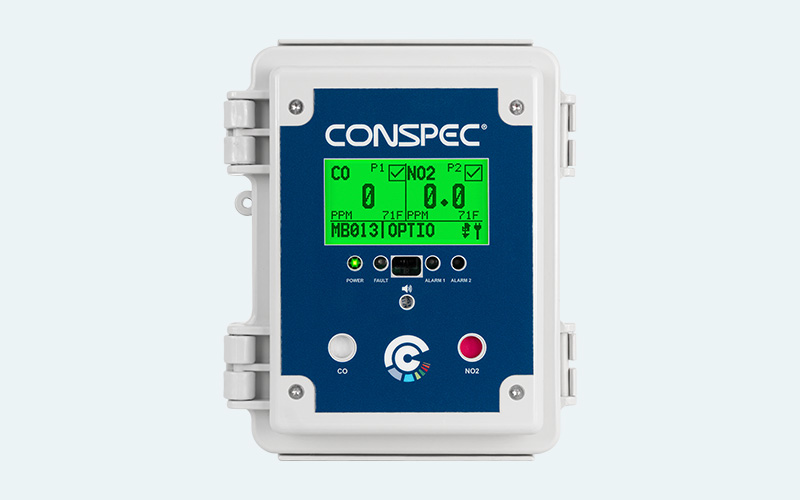
Optio PGM fixed gas detector

Optio PGM Gas Detector

Gas Monitor for Parking Garages

  • Controls parking garage ventilation for CO/NOâ‚‚ safety with flexible sensor placement
  • Dual onboard relays and optional 4–20 mA outputs for system integration and alarm control
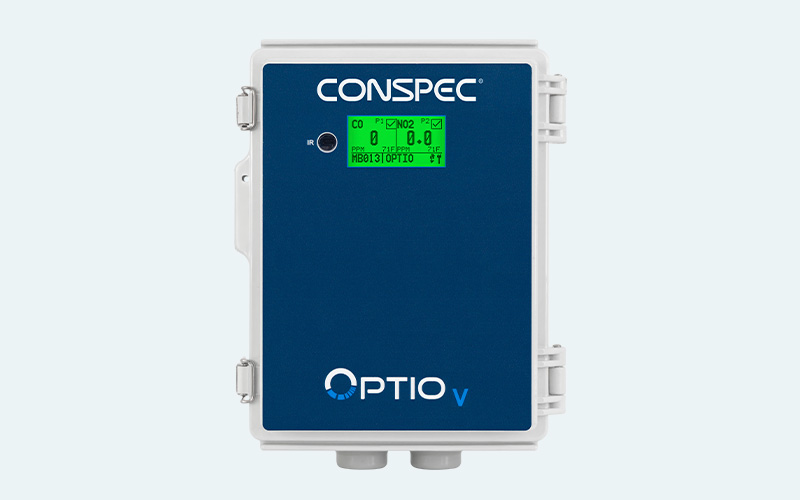
Optio V fixed CO/NOâ‚‚ gas detector

Optio V Gas Detector

CO/NO2 Gas Monitor for Parking Garages

  • CO/NOâ‚‚ detector for enclosed parking with flexible internal or remote sensor configuration
  • Onboard relays and optional 4–20 mA outputs for BAS/Primus V integration and fan/alarm control
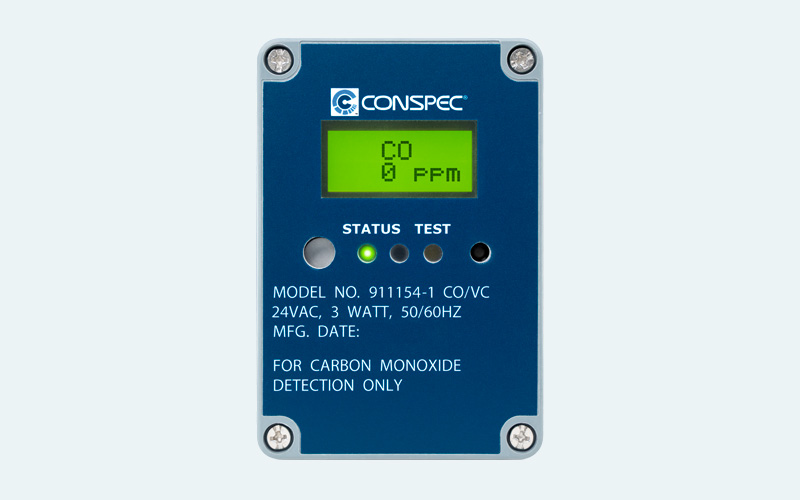
911154-1 fixed carbon monoxide detector and ventilation controller

911154-1 CO/VC Gas Detector

CO Monitor & Ventilation Controller

  • Controls exhaust fans and alarms in enclosed areas with VC requirements for safe CO monitoring
  • Stand-alone CO controller can daisy-chain to create a multi-device network with LCD display and LED status indicators
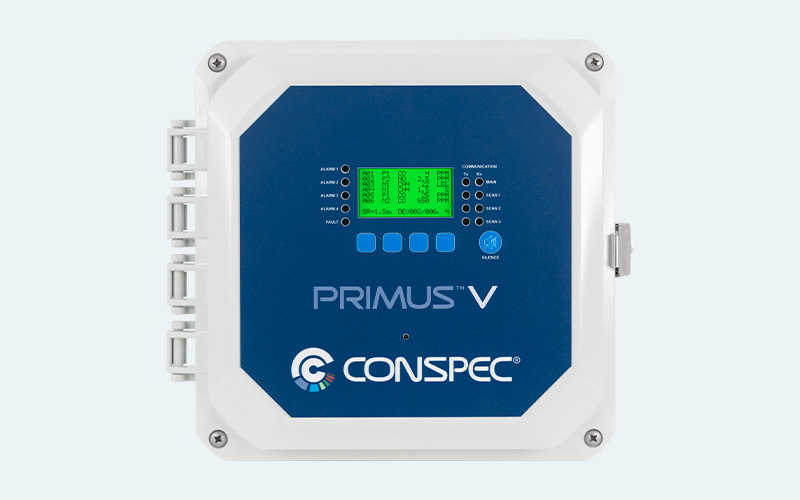
Primus V gas detector controller

Primus V Ventilation Controller

Indoor Gas Monitor Controller​

  • BACnet-enabled controller with Subcon software for easy integration
  • High-capacity sensor support with multi-relay/4–20 mA outputs for BMS integration and zone-based alarms
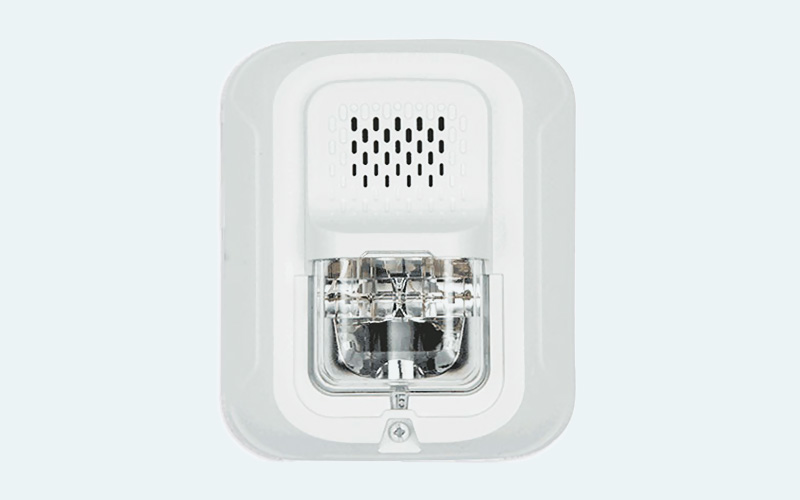
P2WL-P fixed horn and strobe combo

P2WL-P Horn Strobe

Plug-In Horn/Strobe with Custom Settings

  • Plug-in horn/strobe with field-selectable candela, horn tones, and volume settings
  • Tamper-resistant design with universal mounting plate and onboard shorting spring for easy installation

Frequently Asked Questions

Can gas detection automatically shut down equipment and control ventilation?

Yes. Conspec gas detection systems can connect to ventilation, alarms, equipment controls, and building automation systems to support automatic response to changing gas concentrations. Our Primus V offers expanded control solutions for more complex operations.

How many gas sensors does a parking garage need?

There is no universal sensor count rule based solely on parking garage size. Requirements vary by jurisdiction, which may specify minimum sensor quantities, spacing, or monitoring coverage. The number and placement of sensors should account for the applicable codes, garage layout, ventilation system, airflow, and known congestion zones.

Why monitor NOâ‚‚ as well as CO in parking garages?

As of 2021, carbon monoxide (CO) and nitrogen dioxide (NO2) detection are required for enclosed parking garages using automatic ventilation control to maintain compliance with the International Mechanical Code (IMC). The 2021 IMC Section 404.1 requires mechanical ventilation systems in enclosed parking garages to operate continuously or be automatically controlled using CO detectors in conjunction with NO2 detectors.

Do parking garage CO and NOâ‚‚ monitors need to be UL 2075 listed?

Yes. The International Mechanical Code requires UL 2075 listing for any CO or NO2 monitor used to control ventilation in an enclosed parking structure. A monitor without UL 2075 approval will not pass inspection for parking garage applications.

Can one gas detector monitor multiple locations?

Yes, with distributed remote sensors. A single Conspec multi-gas monitor can provide coverage across multiple potential release points, accumulation areas, elevations, and adjacent spaces, extending detection across complex facility layouts without requiring a separate monitor for every location or hazard.

HVAC icon

Discuss Your Parking Garage Application

Every enclosed parking operation has unique ventilation, traffic levels, and local building regulations. Our team is ready to help you design a monitoring solution that is the right fit for your operation.

Complete the form below and an enclosed parking area specialist will be in touch to discuss your application and requirements. We look forward to working together!