Gas, flame, and heat detection for
Mechanical &
Boiler Rooms

Fixed point gas detection for improved life safety. toxic and combustible gas. critical building systems. facility compliance.

HVAC icon

Request the Guide

Learn more about Mechanical & Boiler Rooms in our application guide.

Request the Guide

Learn more about Mechanical & Boiler Rooms in our application guide.

Home Industries Commercial HVAC-R Boiler & Mechanical Rooms

Protect life safety in areas where critical building systems operate.

Mechanical and boiler rooms contain critical building systems which can produce hazardous toxic or combustible gas such as methane (CH4), propane (C3H8), carbon monoxide (CO), and nitrogen dioxide (NO2).

Fuel-fired equipment, refrigeration systems, generators, compressors, and other building systems each has the potential to introduce different hazards into building spaces. Refrigerant leaks, for example, can create toxic, asphyxiation, or flammability hazards, while fuel-fired equipment can introduce combustible gases and toxic combustion products. A leak, equipment malfunction, incomplete combustion, or ventilation failure can quickly transform a routine mechanical room problem into a serious threat to employees and other building occupants, making continuous gas detection an important part of facility safety

An effective gas detection system should be engineered around the specific conditions of a facility to accurately identify gas leaks, incomplete combustion, refrigerant leaks, or equipment malfunctions before they become emergencies. Gas densities, accumulation locations, ventilation, and detection placement must all be considered when designing an effective life safety system.

Conspec knows gas detection is a critical first step in facility safety, which is why we partner with facility managers and engineering teams to configure an integrated gas detection solution that is the right fit for the facility.

Get Application Guide Talk to a Specialist

Conspec's Mechanical & Boiler Room Gas Detection Solution

Flexible, scalable gas monitoring helps detect hazardous conditions early and provides real-time information for building safety and automated response.

Configurable Multi-Gas Monitoring

Detect the toxic or combustible gases produced by your equipment and fuel sources with single-, dual-, or multi-gas configurations.

+

Distributed Remote Sensors

Place sensors where gas is most likely to accumulate, including remote locations and multiple elevations to account for gas behavior and facility geometry.

+

Automated Building System Response

Connect gas detection to ventilation, alarms, and building automation systems for automatic response to changing gas concentrations.

Configurable Multi-Gas Monitoring

Detect the toxic or combustible gases produced by your equipment and fuel sources with single-, dual-, or multi-gas configurations.

+

Distributed Remote Sensors

Place sensors where gas is most likely to accumulate, including remote locations and multiple elevations to account for gas behavior and facility geometry.

+

Automated Building System Response

Connect gas detection to ventilation, alarms, and building automation systems for automatic response to changing gas concentrations.

Benefits of Conspec's Configurable Gas Detection

Configurable gas detection allows facilities to match monitoring coverage to their specific hazards, equipment, and layout. Remote sensors, multi-gas monitoring, and flexible communication options provide the coverage and system integration needed for both small mechanical rooms and complex facilities.

Distributed Coverage

Conspec remote sensors can monitor hazards at potential release points, accumulation areas, multiple elevations, and adjacent spaces, allowing one system to provide real-time coverage across complex facility layouts.

Real-Time Response

Conspec detection systems provide continuous monitoring with outputs for alarms, ventilation, equipment controls, remote notification, and building systems, helping facilities detect changing conditions and act before hazards escalate.

Scalable Architecture

Conspec solutions scale from focused single- and two-gas applications to multi-gas systems with distributed remote sensors, allowing detection coverage to expand with facility size, hazards, and operational requirements.

Integrated Life Safety

Gas, flame, and heat detection can integrate with existing facility infrastructure through flexible communication options. Centralized monitoring supports connections to SCADA, PLC, and BMS/BAS systems across small and large commercial facilities.

Mechanical & Boiler Room Products

Explore our integrated gas monitoring, flame detection, thermal imaging, and network control solutions designed to support life safety, facility awareness, and operational reliability.

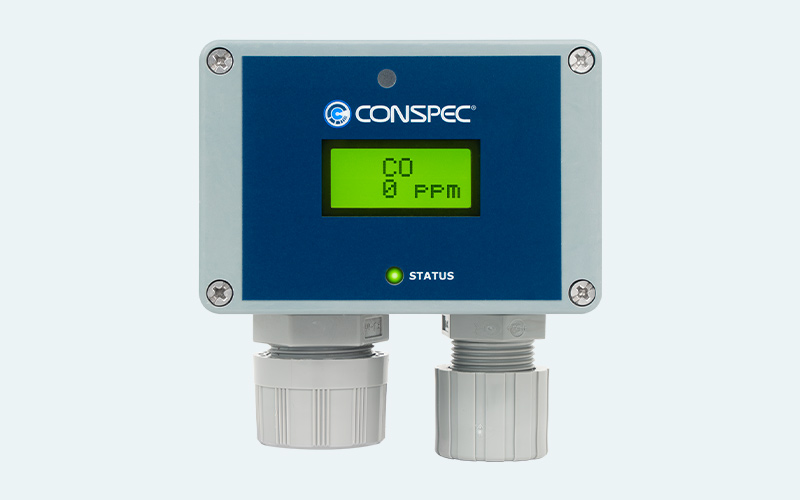
CN Series monitor

CN Series Gas Detector

Gas Monitor for Toxic Gas & Oxygen

  • Detects over 100 gases with support for 35+ sensor types and optional remote sensing for harmful areas.
  • Engineered for indoor and outdoor use in industrial and chemical facilities.
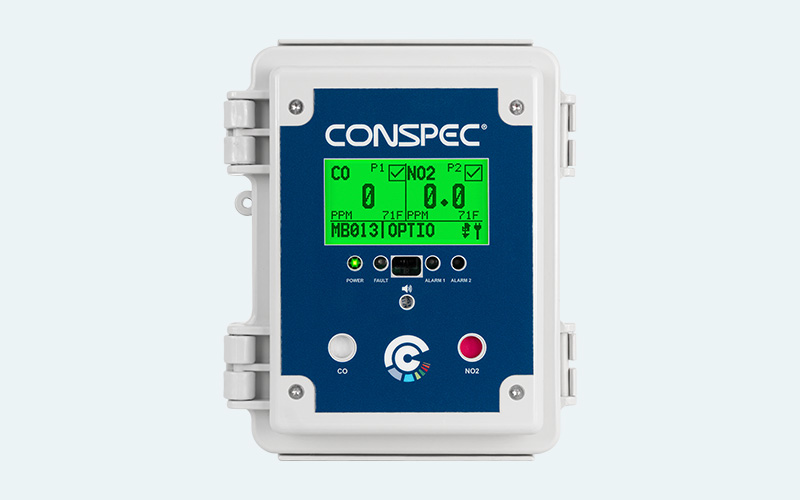
Optio PGM fixed gas detector

Optio PGM Gas Detector

Gas Monitor for Parking Garages

  • Monitors CO and NO2 to detect harmful gases in enclosed parking areas.
  • Dual onboard relays and optional 4–20 mA outputs for system integration and alarm control.
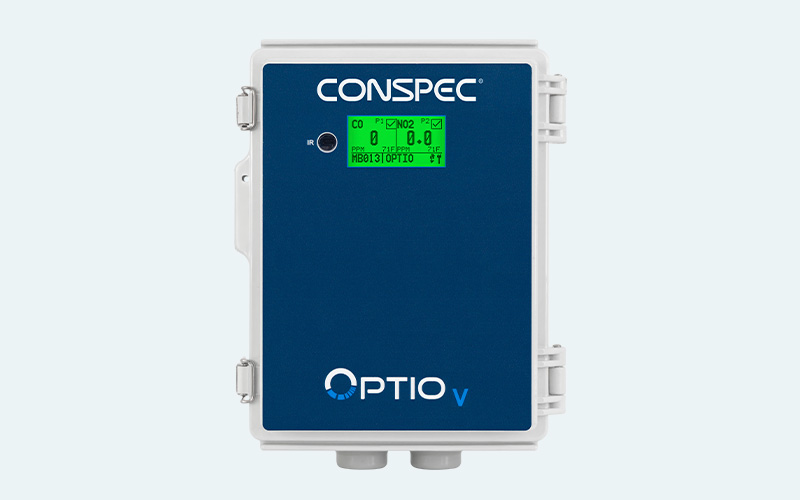
Optio V fixed CO/NOâ‚‚ gas detector

Optio V Gas Detector

CO/NO2 Gas Monitor for Parking Garages

  • Monitors CO and NO2 to detect harmful gases in enclosed parking areas with flexible internal or remote sensor configuration.
  • Onboard relays and optional 4–20 mA outputs for BAS/Primus V integration and fan/alarm control.
Optio XP Multi-Gas Monitor

Optio XP Gas Detector

Explosion Proof Gas Monitor

  • Approved for use in Class 1, Zone 1 hazardous environments.
  • Supports wired and wireless configurations with up to 6 sensors for fixed multi-gas detection.
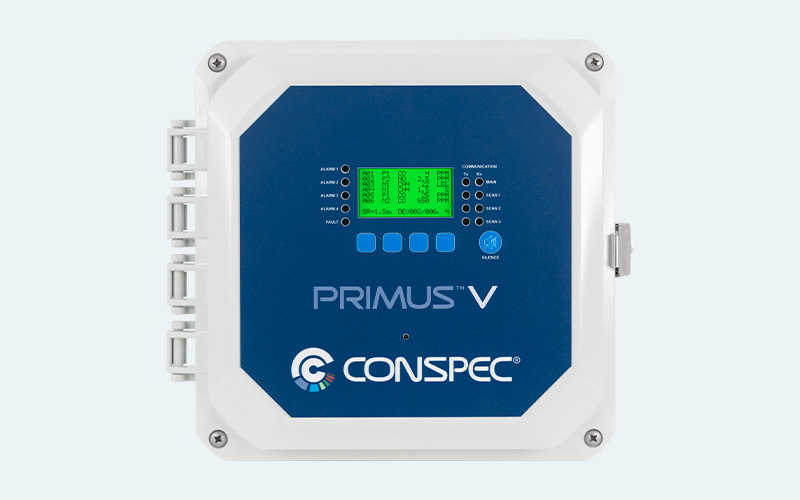
Primus V gas detector controller

Primus V Ventilation Controller

Indoor Gas Monitor Controller​

  • BACnet-enabled controller with Subcon software for easy integration.
  • High-capacity sensor support with multi-relay/4–20 mA outputs for BMS integration and zone-based alarms.
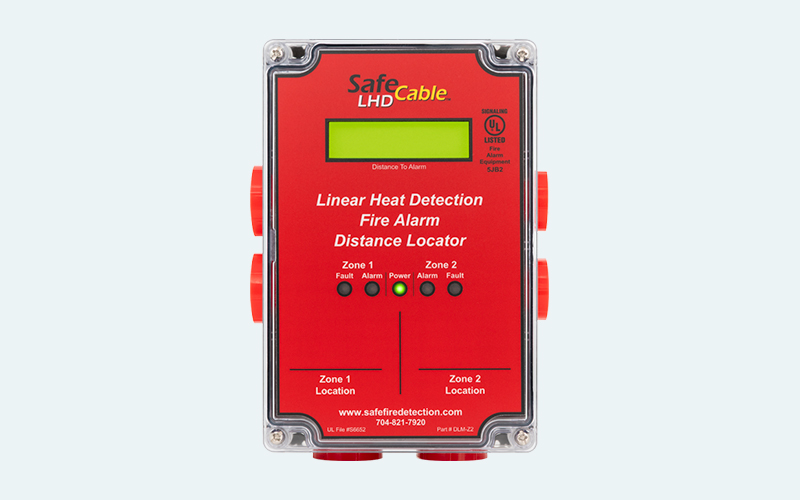
Linear Heat Detection DLM-Z2

Linear Heat Detection (LHD)

Digital Heat Detection for Fire Protection

  • Continuous digital heat detection along the entire cable length with multiple fixed alarm temperatures.
  • Ultra-low resistance twisted pair tri-metallic with distance locating options and universal panel compatibility.

Frequently Asked Questions

Can one multi-gas monitor support multiple detection points in a facility?

Yes, with distributed remote sensors. Our Optio multi-gas monitors can provide coverage across multiple potential release points, accumulation areas, elevations, and adjacent spaces, extending detection across complex facility layouts without requiring a separate monitor for every location or hazard.

Do parking garage CO and NOâ‚‚ monitors need to be UL 2075 listed?

Yes. The International Mechanical Code requires UL 2075 listing for any CO or NO2 monitor used to control ventilation in an enclosed parking structure. A monitor without UL 2075 approval will not pass inspection for parking garage applications.

Why monitor NOâ‚‚ as well as CO in parking garages?

As of 2021, carbon monoxide (CO) and nitrogen dioxide (NO2) detection are required for enclosed parking garages using automatic ventilation control to maintain compliance with the International Mechanical Code (IMC). The 2021 IMC Section 404.1 requires mechanical ventilation systems in enclosed parking garages to operate continuously or be automatically controlled using CO detectors in conjunction with NO2 detectors.

Can gas detection automatically shut down equipment and control ventilation?

Yes. Conspec gas detection systems can connect to ventilation, alarms, equipment controls, and building automation systems to support automatic response to changing gas concentrations. Our Primus V offers expanded control solutions for more complex operations.

How many gas sensors does a parking garage need?

There is no universal sensor count rule based solely on parking garage size. Requirements vary by jurisdiction, which may specify minimum sensor quantities, spacing, or monitoring coverage. The number and placement of sensors should account for the applicable codes, garage layout, ventilation system, airflow, and known congestion zones.

HVAC icon

Discuss your Mechanical and Boiler Room Application

Every facility faces unique challenges depending on equipment, local regulations, geometry, and building size. Our team is ready to help you design a solution tailored to your critical systems and the hazards they can create.

Complete the form below and a mechanical and boiler room specialist will be in touch to discuss your application and requirements. We look forward to working together!