What Water & Wastewater Projects Need to Know About BAA- / BABA-Compliance
Protecting water and wastewater infrastructure starts with choosing equipment that meets both safety requirements and federal funding requirements.
Across the United States, communities are investing heavily in aging water and wastewater infrastructure. Treatment plants, pumping stations, collection systems, and other critical facilities are being upgraded to improve reliability, resiliency, and public safety.
For projects supported by federal funding, however, selecting the right equipment involves more than performance and price.
Buy American requirements can influence which products are eligible for federally funded infrastructure projects.
For engineers, contractors, facility managers, and project owners, understanding the difference between the Buy American Act (BAA) and the Build America, Buy America Act (BABA) can help prevent costly procurement issues; and ensure critical safety equipment meets project requirements from the start.
What Are BAA and BABA?
While the terms are sometimes used interchangeably, BAA and BABA apply in different contexts.
- Buy American Act (BAA) – BAA establishes domestic preference requirements for certain federal procurements. In general, it requires covered products to meet specific domestic content and manufacturing requirements.
- Build America, Buy America Act (BABA) – BABA expanded domestic preference requirements to federally funded infrastructure projects, including many projects receiving federal financial assistance through programs administered by agencies such as the Environmental Protection Agency (EPA).
For water and wastewater projects, BABA can be particularly important because federal funding is often used to support improvements to treatment facilities, drinking water systems, and other essential infrastructure.
The specific requirements vary by project, funding source, and applicable federal agency rules. That’s why compliance should be considered during the design and procurement stages; not after equipment has already been selected.
Why Gas Detection Matters in Water & Wastewater Facilities
Water and wastewater treatment facilities contain a number of potentially hazardous environments. Wastewater treatment processes can generate or accumulate gases including:
- Hydrogen Sulfide (H₂S) – A toxic and potentially lethal gas commonly associated with wastewater and sewage.
- Methane (CH₄) – A combustible gas that can create an explosion hazard when it accumulates in confined or enclosed spaces.
- Oxygen (O₂) – Oxygen-deficient atmospheres can create an immediate danger to personnel entering tanks, wet wells, lift stations, and other confined spaces.
- Carbon Dioxide (CO₂) – elevated concentrations can displace oxygen and create an asphyxiation hazard.
These hazards aren’t limited to the treatment process itself. Gas accumulation can occur in wet wells, lift stations, pump rooms, digesters, sewer systems, and other enclosed or poorly ventilated areas.
Gas detection provides an important layer of protection by continuously monitoring atmospheric conditions and providing early warning when hazardous concentrations develop.
But for federally funded infrastructure projects, the safety performance of the equipment is only part of the equation.
BAA- / BABA-Compliance Should Be Part of the Specification
Selecting gas detection solution late in a project can create unnecessary complications.
If a project has BAA or BABA requirements, engineers and contractors need to know whether specified equipment satisfies those requirements before procurement. Substituting a non-compliant product after the fact can potentially lead to delays, redesigns, additional costs, or procurement challenges.
A better approach is to address domestic-content requirements during the specification process. When evaluating gas detection systems, project teams should consider:
- Is the product covered by the project’s domestic preference requirements? Determine whether BAA, BABA, or another domestic preference provision applies to the specific project and equipment.
- Where is the product manufactured? Domestic manufacturing can be an important component of compliance, but it is not necessarily the only consideration. Applicable requirements may also address the origin and value of component parts.
- Can the manufacturer provide documentation? Manufacturers should be able to provide appropriate documentation supporting compliance when required by the project.
- Does the equipment meet the project’s technical requirements? Domestic sourcing should never come at the expense of safety. The selected gas detection system still needs to provide the appropriate sensors, monitoring capabilities, communications, alarms, and environmental durability for the application.
Domestic Manufacturing and Critical Infrastructure
For water and wastewater facilities, gas detection isn’t simply another piece of instrumentation. It can be part of the facility’s overall safety and control strategy.
That makes the ability to source compliant equipment from a domestic manufacturer particularly valuable.
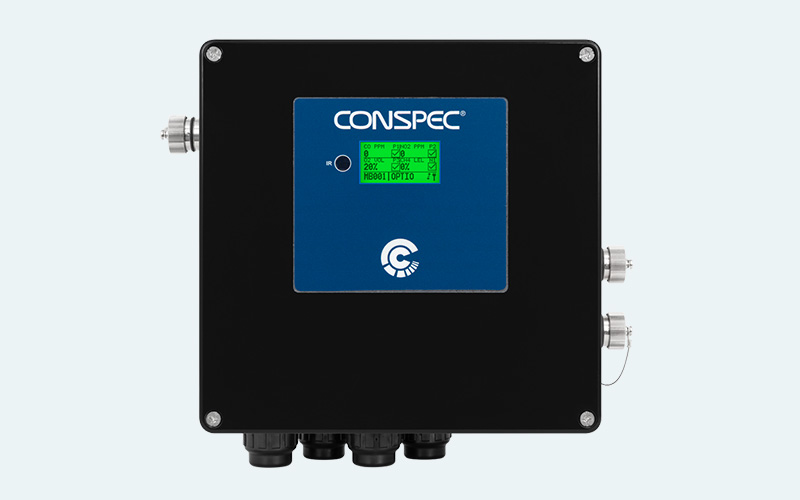
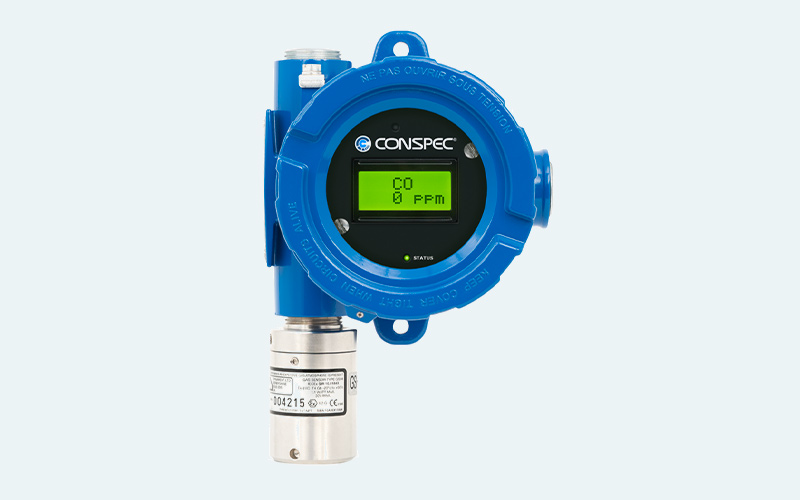
Conspec Controls designs and manufactures gas detection systems in the United States, providing solutions for applications where toxic, combustible, and oxygen-deficient atmospheres present a risk to personnel and facilities.
Conspec has identified a range of products that meet BAA and BABA requirements. This includes gas detection and control solutions that can be integrated into facility monitoring and automation systems.
For project teams working on federally funded infrastructure, that combination of domestic manufacturing, gas detection expertise, and system integration capabilities can simplify the process of specifying safety equipment for critical facilities.
Build Compliance Into the Project From Day One
Federal infrastructure investment is helping communities modernize some of the most important assets in the country. As these projects move forward, safety professionals and engineering teams have an opportunity to take a more proactive approach to gas monitoring; while also considering the procurement requirements attached to federal funding.
For water and wastewater treatment facilities, that means evaluating gas detection early in the design process and confirming that selected equipment meets the project’s applicable technical and domestic-content requirements.
The result is a better-prepared project, a safer facility, and fewer surprises during procurement.
∎